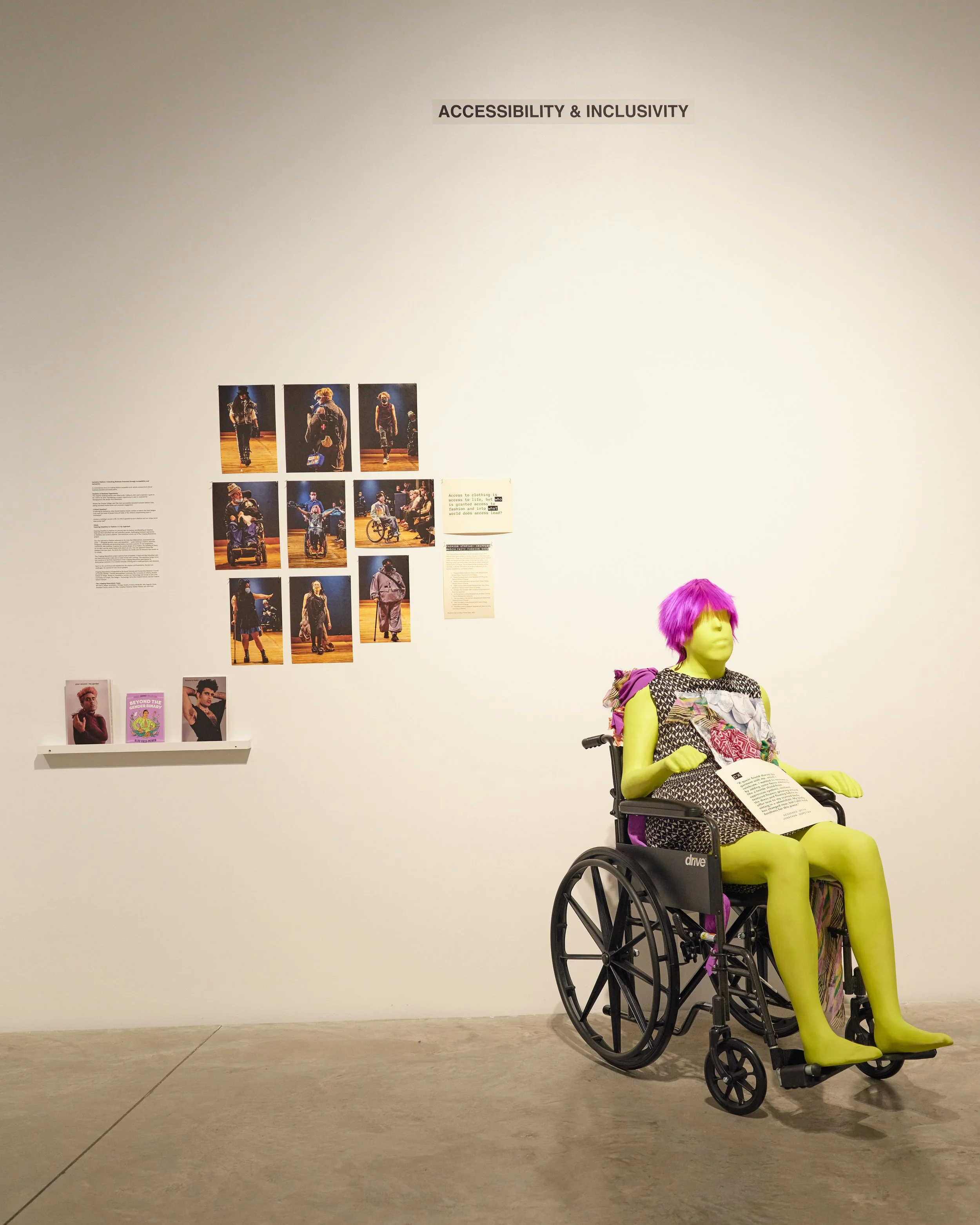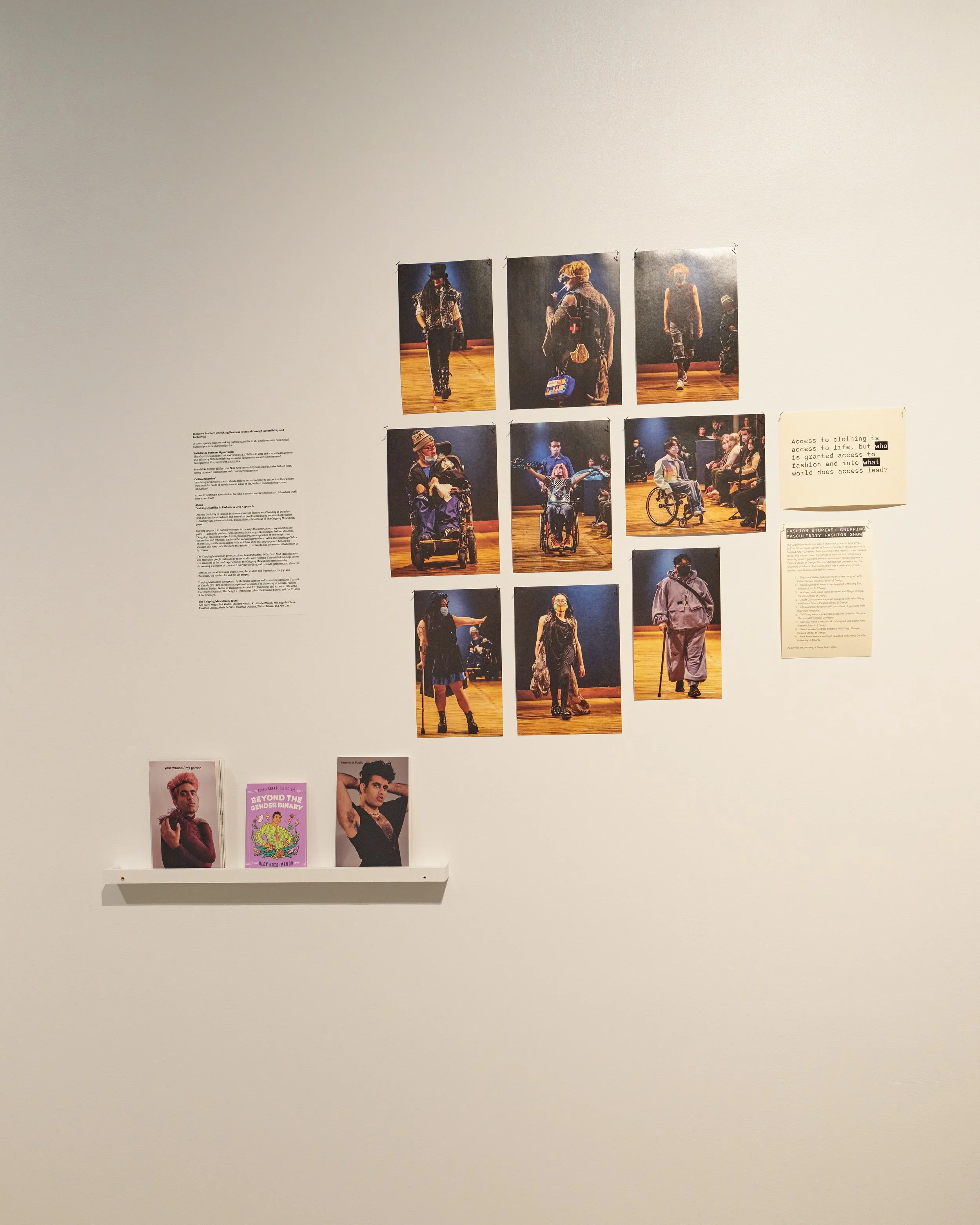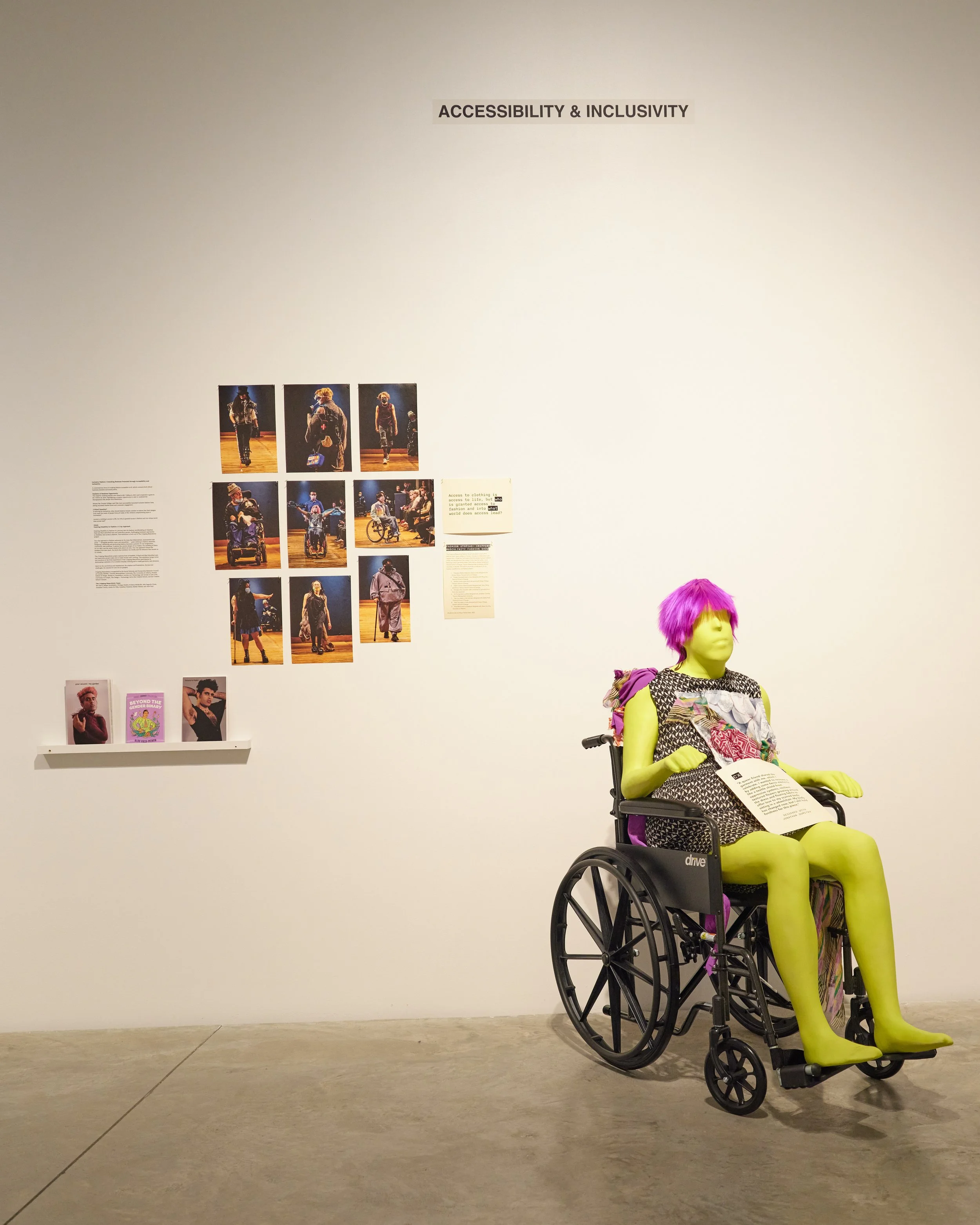
Accessibility & Inclusivity
Inclusive Fashion: Unlocking Business Potential through Accessibility and Inclusivity
Critical Question?
In striving for inclusivity, what should fashion brands consider to ensure that their designs truly meet the needs of people from all walks of life, without compromising style or innovation?
Access to clothing is access to life, but who is granted access to fashion and into whose world does access lead? A contemporary focus on making fashion accessible to all, which connects both ethical business practices and social justice.
Statistics & Business Opportunity
The adaptive clothing market was valued at $2.7 billion in 2021 and is expected to grow to $4.3 billion by 2026, highlighting a massive opportunity to cater to underserved demographics like people with disabilities.
Brands like Tommy Hilfiger and Nike have successfully launched inclusive fashion lines, seeing increased market share and consumer engagement.
About:
Desiring Disability in Fashion: A Crip Approach.
Desiring Disability in Fashion is a journey into the fashion worldbuilding of Disabled, Deaf and Mad-identified men and masculine people, challenging dominant approaches to disability and access in fashion. This exhibition is built out of The Cripping Masculinity project.
Our crip approach to fashion welcomes in the ways that dissociations, asymmetries and pains — alongside genders, races, and sexualities — greet clothing to fashion identities. Designing, exhibiting and performing fashion becomes a practice of crip imagination, connection, and rebellion. It salutes the uneven shapes of our bodies, the caressing of fabric on our skin, and the metal chains with which we stim. Our crip approach honors the sneakers that stare back, the shirts that reinforce our words, and the sweaters that cocoon us in crowds.
The Cripping Masculinity project explores how d/Disabled, D/deaf and Mad-identified men and masculine people make and re-make worlds with clothing. This exhibition brings voices and emotions to the lived experiences of the Cripping Masculinity participants by showcasing a selection of co-created everyday clothing and re-made garments, and elements.
Here’s to the convictions and trepidations, the wisdom and frustrations, the joys and challenges, the reached for and not yet grasped.
Cripping Masculinity is supported by the Social Sciences and Humanities Research Council of Canada (SSHRC), Toronto Metropolitan University, The University of Alberta, Parsons School of Design, Bodies in Translation: Activist Art, Technology and Access to Life at the University of Guelph, The Design + Technology Lab at the Creative School, and the Creative School Catalyst.
The Cripping Masculinity Team:
Ben Barry, Megan Strickfaden, Philippa Nesbitt, Kristina McMullin, Mia Yaguchi-Chow, Jonathan Clancy, Alexis De Villa, Jonathan Dumitra, Kishan Tehara, and Aris Cinti.